
PAS Test vs. Chemical Breath Test
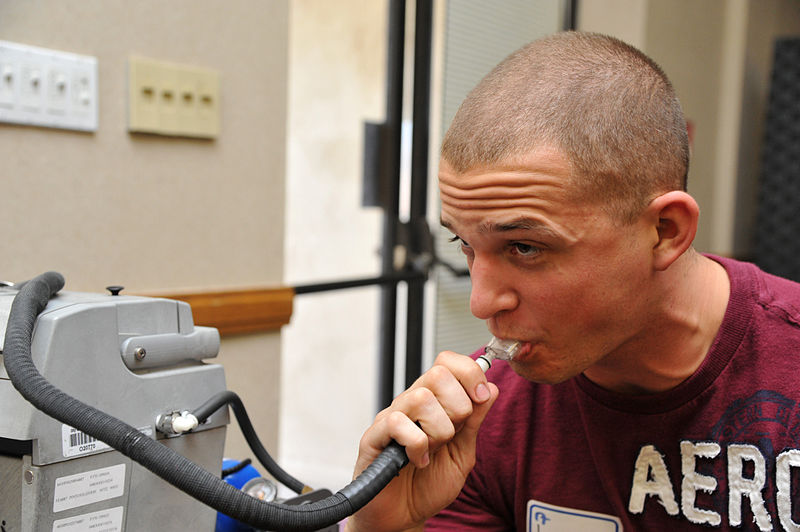
Usually when I talk about a Breathalyzer test, it's referring to either the roadside Preliminary Alcohol Screening (PAS) test or the chemical test that is administered at the police station. However, these are two completely different tests with different requirements and potentially different legal ramifications.
The PAS test is part of the roadside sobriety tool kit that officers carry around with them. As a field sobriety test kit, it can be easily used and gives a general idea of the blood alcohol content (BAC) of the person taking it. However, because it is not a fully accurate test (with results varying up to 15% from actual BAC), the court does not recognize the test for legal reasons. The truth is that one out of every four people tested will show a higher BAC than they actually have.
There are all kind of environmental factors that can influence the results of a PAS breathalyzer test, including:
- Police radios
- Dirt
- Smoke
- Cleaning products
- Breath mints
- Cell phones
- Nail polish
- Gasoline
- Relative humidity
It is important to note that the PAS test, as with all field sobriety testing, is completely optional. Refusing to take the PAS will, however, result in your license being taken and a trip down to the local precinct for a mandatory chemical breath test.
Chemical testing can be broken down into the stationary breath analysis, a blood test, or a urine test. The stationary breath analysis works on the same principles as the field PAS test. The major difference is that the test is administered in the controlled environment of a police station. Many of the potential contaminants are removed in this test. Still, blood or vomit in the mouth or even irregular breathing patterns can influence the results of a Breathalyzer test.
The most accurate of all tests is the blood test. It is either taken at a hospital or at the police station. These are the least convenient and most expensive of all BAC tests and are usually only done at the request of an officer who feels the Breathalyzer is not accurate. Even these tests have potential for misrepresentation or even inaccuracy if they are not administered correctly. People who have diabetes or who have been taking cough medicine or herbal supplements can show higher than normal BAC levels. Also, if an alcohol swab is used to clean the area before a blood draw, the alcohol may be picked up on the sample.
A more common alternative to the blood test is the urine test. The biggest drawback to these tests is that they take much longer to process, so some jurisdictions would rather not use them. The test can be administered at the police station, at a clinic or hospital, or even at the subject's own home. Tests must be verified off-site by an authorized lab.
The most important thing that you should know is that a PAS test is voluntary and the officer administering it is required by law to tell you so. If you are not advised of this, it is considered an illegal search. But if you do refuse the PAS, you could be setting yourself up for a longer license suspension, jail time, or even the installation of an ignition lock device if you are ultimately convicted.
By Ted Burgess Google With cell phones becoming ubiquitous in our lives, using them in the car has become commonplace. But is talking on the phone safer than drinking and driving? What about texting and driving? The numbers are in, and the clear winner is... not doing any of the above.
Drinking and driving and distracted driving among college students were found to have very similar results in testing done during a
With cell phones becoming ubiquitous in our lives, using them in the car has become commonplace. But is talking on the phone safer than drinking and driving? What about texting and driving? The numbers are in, and the clear winner is... not doing any of the above.
Drinking and driving and distracted driving among college students were found to have very similar results in testing done during a 


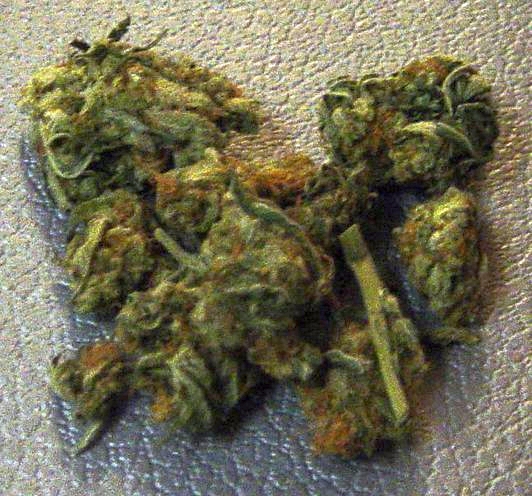 Personally, it seems to me that California is well on its way to legalizing marijuana like Colorado and Washington. Making it legal won't eliminate all of the legal ramifications that come with using it, though. For instance, a marijuana DUI would be just as likely with legalization as it would be while the drug is still illegal.
The difference between a regular DUI and a marijuana-related one is in the way that the drug is measured. This makes it both easier to be arrested for and easier to fight in court. According to California Vehicle Code 23152(e) VC, the arresting officer must believe that your marijuana use has hindered your "ability to drive with the caution characteristic of a sober person of ordinary prudence under the same or similar circumstances." Basically, the officer has to think you are unable to drive.
Here's what needs to be proven in a court of law:
Personally, it seems to me that California is well on its way to legalizing marijuana like Colorado and Washington. Making it legal won't eliminate all of the legal ramifications that come with using it, though. For instance, a marijuana DUI would be just as likely with legalization as it would be while the drug is still illegal.
The difference between a regular DUI and a marijuana-related one is in the way that the drug is measured. This makes it both easier to be arrested for and easier to fight in court. According to California Vehicle Code 23152(e) VC, the arresting officer must believe that your marijuana use has hindered your "ability to drive with the caution characteristic of a sober person of ordinary prudence under the same or similar circumstances." Basically, the officer has to think you are unable to drive.
Here's what needs to be proven in a court of law:
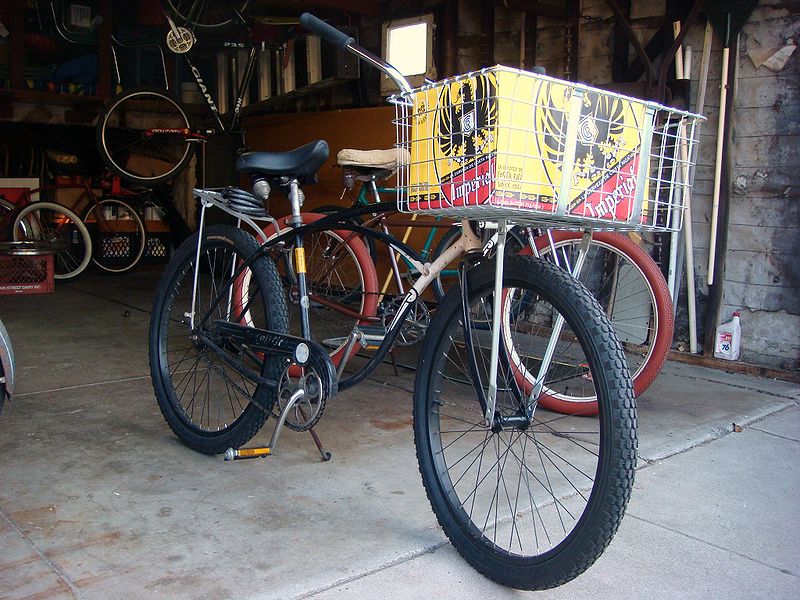 You might think you'll outsmart the police the next time you go out drinking by riding your ten-speed instead of driving your car. Well, here's some news that's going to put the kibosh on that idea quick. You can still get a DUI when riding your bike. In fact, you can get a DUI while operating anything that the law considers a vehicle. In California, that could be a bicycle, a tricycle, a unicycle, or even a horse! That's right: There was a recent case in San Francisco that involved a man being charged with DUI after he mounted a horse and rode it a few blocks. He was also charged with animal cruelty and a laundry list of other infractions that stemmed from his actions while under the influence.
In California, there is a special law specifically for cycling under the influence (CUI), Cal. Veh. Code § 21200.5: "Notwithstanding Section 21200, it is unlawful for any person to ride a bicycle upon a highway while under the influence of an alcoholic beverage or any drug, or under the combined influence of an alcoholic beverage and any drug. Any person arrested for a violation of this section may request to have a chemical test made of the person's blood, breath, or urine for the purpose of determining the alcoholic or drug content of that person's blood pursuant to Section 23612, and, if so requested, the arresting officer shall have the test performed. A conviction of a violation of this section shall be punished by a fine of not more than two hundred fifty dollars ($250). Violations of this section are subject to Section 13202.5."
As mentioned before, this statute is applicable to all non-motorized vehicles and livestock. If you can ride it, the cycling law can be applied to it.
There are no specific limits in regard to blood alcohol content (BAC) level when it comes to a CUI. It is left completely to the discretion of the arresting officer. However, there are some protocols that must be adhered to for the CUI arrest to be deemed valid. These include watching you for an adequate amount of time before determining that you are indeed under the influence. Fifteen minutes is a standard that has been used in the court system in cases such as this. Since very few officers will observe a single subject for this length of time, it can be argued that there was not sufficient probable cause to pull over the cyclist. Of course, if you managed to crash your bike during that time, this 15-minute guide would not be applicable.
If you are apprehended for CUI, you can request that a BAC test be performed. This could be a very important piece of evidence for you to have should you wish to fight the infraction. This is another place where there are strict procedural guidelines outlined in Title 17. If any of the outlined procedures are not met, the blood alcohol test can be deemed inaccurate and the results removed from evidence.
If you or a loved one has been charged with CUI, document the incident in as much detail as you can remember and call an attorney right away. Because the arrest is discretionary, there is a good chance that a proficient lawyer can help.
By Ted Burgess
You might think you'll outsmart the police the next time you go out drinking by riding your ten-speed instead of driving your car. Well, here's some news that's going to put the kibosh on that idea quick. You can still get a DUI when riding your bike. In fact, you can get a DUI while operating anything that the law considers a vehicle. In California, that could be a bicycle, a tricycle, a unicycle, or even a horse! That's right: There was a recent case in San Francisco that involved a man being charged with DUI after he mounted a horse and rode it a few blocks. He was also charged with animal cruelty and a laundry list of other infractions that stemmed from his actions while under the influence.
In California, there is a special law specifically for cycling under the influence (CUI), Cal. Veh. Code § 21200.5: "Notwithstanding Section 21200, it is unlawful for any person to ride a bicycle upon a highway while under the influence of an alcoholic beverage or any drug, or under the combined influence of an alcoholic beverage and any drug. Any person arrested for a violation of this section may request to have a chemical test made of the person's blood, breath, or urine for the purpose of determining the alcoholic or drug content of that person's blood pursuant to Section 23612, and, if so requested, the arresting officer shall have the test performed. A conviction of a violation of this section shall be punished by a fine of not more than two hundred fifty dollars ($250). Violations of this section are subject to Section 13202.5."
As mentioned before, this statute is applicable to all non-motorized vehicles and livestock. If you can ride it, the cycling law can be applied to it.
There are no specific limits in regard to blood alcohol content (BAC) level when it comes to a CUI. It is left completely to the discretion of the arresting officer. However, there are some protocols that must be adhered to for the CUI arrest to be deemed valid. These include watching you for an adequate amount of time before determining that you are indeed under the influence. Fifteen minutes is a standard that has been used in the court system in cases such as this. Since very few officers will observe a single subject for this length of time, it can be argued that there was not sufficient probable cause to pull over the cyclist. Of course, if you managed to crash your bike during that time, this 15-minute guide would not be applicable.
If you are apprehended for CUI, you can request that a BAC test be performed. This could be a very important piece of evidence for you to have should you wish to fight the infraction. This is another place where there are strict procedural guidelines outlined in Title 17. If any of the outlined procedures are not met, the blood alcohol test can be deemed inaccurate and the results removed from evidence.
If you or a loved one has been charged with CUI, document the incident in as much detail as you can remember and call an attorney right away. Because the arrest is discretionary, there is a good chance that a proficient lawyer can help.
By Ted Burgess
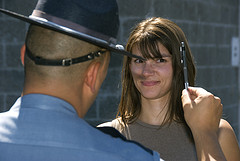 I know that some of my posts are sensationalist and focus on things that are fun to read, but this one is different. This time, I am talking about drinking and driving, more importantly what happens when you get pulled over for suspected drinking and driving. A DUI is a very serious offense, and unfortunately, it is a very discretionary process. In fact, California law has two different charges for DUI. The first is completely discretionary, and blood alcohol content (BAC) isn't even a major factor: If the officer feels you were driving erratically, any alcohol in your blood will lead to a driving under the influence charge. The second possible charge is for a BAC of more than 0.08% as measured by a breath or blood chemical test. In most cases where the BAC is measured above 0.08%, both charges are considered.
Here's what you should do if you are pulled over for a suspected DUI.
When you are pulled over, you are in a state of detention. You are not technically in custody, but you are also not free to go. Because you are not in custody, the officer does not have to inform you of your Miranda rights. But just because you are not told of these rights doesn't mean you don't have them. According to California law, you are only required to provide your driver's license, car registration, and proof of insurance. This doesn't mean you should sit there silently and ignore an officer's questions: Instead, you should politely inform the officer that you are declining to answer due to your Fifth Amendment rights.
The officer will probably tell you to step out of the car and take a field sobriety test. This is also not required by law, and you should refuse based on the grounds that the test is unreliable and subjective. It is important that you say all of this out loud because most California officers carry recording devices. These recordings can be used later in a court of law as part of your defense should you be arrested. You may also be asked to take a field breath test. Again, this is not required by law. As long as you are over 21 and not currently on probation for a previous DUI, you do not have to take this test. Again, make sure you state that you do not believe this is required by law and that the test is unreliable.
At this point, the officer can either take you into custody or let you go on your way. If you are taken into custody, you will be read your Miranda rights and taken to the police station, where you will be required to take a breath test or submit to a blood test. This test is required by law: Do not refuse it. If you do refuse, you will automatically have your license suspended for a year and the police will force the blood test on you anyway. If you are given the choice, the breath test is easier to discredit at a trial due to its accuracy issues, but a blood test can be retained to be retested at a later date.
If your chemical test comes back at 0.08% or higher, the officer will take away your driver's license and give you a pink slip that is a temporary license. You'll also receive a paper that states that your license will be automatically suspended for four months in 30 days. You will have 10 days to schedule a hearing to contest this suspension. This is a strict window, and you must make sure to request a hearing in that period.
Once you are released from the police station, immediately write down everything you can about the events of the day, including what you did before you were pulled over, the conversation you had with the arresting officer, and anything that happened at the station. This record will be invaluable to your attorney when putting together your defense.
Fighting a DUI is a serious matter, and you'll need an attorney that specializes in DUI litigation for the best defense possible. Don't try to fight the system on your own. There is simply too much at stake.
By Ted Burgess
I know that some of my posts are sensationalist and focus on things that are fun to read, but this one is different. This time, I am talking about drinking and driving, more importantly what happens when you get pulled over for suspected drinking and driving. A DUI is a very serious offense, and unfortunately, it is a very discretionary process. In fact, California law has two different charges for DUI. The first is completely discretionary, and blood alcohol content (BAC) isn't even a major factor: If the officer feels you were driving erratically, any alcohol in your blood will lead to a driving under the influence charge. The second possible charge is for a BAC of more than 0.08% as measured by a breath or blood chemical test. In most cases where the BAC is measured above 0.08%, both charges are considered.
Here's what you should do if you are pulled over for a suspected DUI.
When you are pulled over, you are in a state of detention. You are not technically in custody, but you are also not free to go. Because you are not in custody, the officer does not have to inform you of your Miranda rights. But just because you are not told of these rights doesn't mean you don't have them. According to California law, you are only required to provide your driver's license, car registration, and proof of insurance. This doesn't mean you should sit there silently and ignore an officer's questions: Instead, you should politely inform the officer that you are declining to answer due to your Fifth Amendment rights.
The officer will probably tell you to step out of the car and take a field sobriety test. This is also not required by law, and you should refuse based on the grounds that the test is unreliable and subjective. It is important that you say all of this out loud because most California officers carry recording devices. These recordings can be used later in a court of law as part of your defense should you be arrested. You may also be asked to take a field breath test. Again, this is not required by law. As long as you are over 21 and not currently on probation for a previous DUI, you do not have to take this test. Again, make sure you state that you do not believe this is required by law and that the test is unreliable.
At this point, the officer can either take you into custody or let you go on your way. If you are taken into custody, you will be read your Miranda rights and taken to the police station, where you will be required to take a breath test or submit to a blood test. This test is required by law: Do not refuse it. If you do refuse, you will automatically have your license suspended for a year and the police will force the blood test on you anyway. If you are given the choice, the breath test is easier to discredit at a trial due to its accuracy issues, but a blood test can be retained to be retested at a later date.
If your chemical test comes back at 0.08% or higher, the officer will take away your driver's license and give you a pink slip that is a temporary license. You'll also receive a paper that states that your license will be automatically suspended for four months in 30 days. You will have 10 days to schedule a hearing to contest this suspension. This is a strict window, and you must make sure to request a hearing in that period.
Once you are released from the police station, immediately write down everything you can about the events of the day, including what you did before you were pulled over, the conversation you had with the arresting officer, and anything that happened at the station. This record will be invaluable to your attorney when putting together your defense.
Fighting a DUI is a serious matter, and you'll need an attorney that specializes in DUI litigation for the best defense possible. Don't try to fight the system on your own. There is simply too much at stake.
By Ted Burgess